
Spring Roofing Special – Save $1,000 on Your New Roof!
Immediate Steps Every Homeowner Should Take
When severe weather strikes the Kansas City area, the immediate aftermath can feel overwhelming. Hail storms, high winds, and tornadoes are common occurrences throughout spring and summer months in this region, and knowing how to respond quickly can make the difference between a smooth insurance claim and months of complications.
Your first priority is always safety. Before inspecting any damage, wait until conditions are completely safe. Avoid going outside during active storms, and watch for downed power lines, broken glass, and unstable structures once the weather passes. If you suspect structural damage to your home, evacuate immediately and contact emergency services.
Once it is safe to proceed, document everything you see. Use your smartphone to photograph and video all visible damage from multiple angles. Capture wide shots showing the overall property and close-ups of specific damage points. Pay special attention to your roof, siding, windows, gutters, and any outdoor structures. This visual evidence becomes critical when filing your insurance claim.
Take temporary measures to prevent further damage, but do not make permanent repairs yet. Cover broken windows with plywood or tarps, place buckets under active leaks, and remove standing water if possible. Keep all receipts for materials purchased during this emergency response period, as these costs are typically reimbursable through your insurance policy.
Contact your insurance company within 24 hours of discovering damage. Most policies require prompt notification, and delays can complicate your claim. Have your policy number ready, provide a brief description of the damage, and ask about the next steps in their claims process. Request clarification on your coverage limits, deductible amount, and whether your policy provides Actual Cash Value or Replacement Cost Value coverage.
What to Look for Beyond Obvious Destruction
Modern roofing technology offers historic homeowners the best of both worlds: authentic period appearance with superior durability and weather protection. Advanced synthetic materials now replicate the visual characteristics of traditional slate, wood shake, and clay tiles while providing enhanced resistance to Kansas City’s severe weather patterns including hail storms, high winds, and temperature extremes.
Premium architectural shingles manufactured by leading suppliers feature multi-layered construction that mimics the dimensional texture of natural slate. These products incorporate color blending and shadow lines that replicate hand-cut stone tiles while weighing significantly less than authentic slate. The reduced weight eliminates structural reinforcement requirements that genuine slate installation would demand on older homes.
Synthetic slate and shake products meet Class A fire ratings and impact resistance standards that historic materials cannot achieve. For properties in Kansas City where summer hail storms frequently damage traditional roofing, impact-resistant shingles rated for severe weather provide crucial protection while satisfying historical review board requirements for visual authenticity.
Composite roofing systems designed for historic applications offer warranties extending 30 to 50 years, far exceeding the lifespan of original materials. These warranties cover both material defects and weather damage, providing financial protection that property insurance companies increasingly require. Color stability guarantees ensure that roofing maintains its appearance throughout the warranty period without the fading or deterioration common to natural materials exposed to intense summer sun.
ACV vs. RCV Coverage Explained
One of the most confusing aspects of roof insurance claims involves understanding how your policy calculates payment. Most homeowner policies provide coverage under either Actual Cash Value (ACV) or Replacement Cost Value (RCV) terms, and the difference can amount to thousands of dollars in your final settlement.
Actual Cash Value policies pay for the depreciated value of your damaged roof based on its age and condition before the storm. If your roof was 15 years old at the time of damage, the insurance company calculates what that used roof was worth, not what a new replacement would cost. This often leaves homeowners with substantial out-of-pocket expenses to complete repairs or replacement.
Replacement Cost Value policies, by contrast, pay the full cost to replace your damaged roof with new materials of similar kind and quality, without deducting for depreciation. These policies typically work on a two-payment system. You receive an initial payment based on ACV, then after completing the work and submitting proof of payment to your contractor, the insurance company releases the recoverable depreciation amount.
Review your policy declarations page to determine which type of coverage you carry. Pay attention to your deductible amount, coverage limits, and any special provisions for wind or hail damage. Some policies in areas prone to severe weather include higher deductibles specifically for wind and hail claims, sometimes calculated as a percentage of your home’s insured value rather than a flat dollar amount.
Understanding these details before meeting with your insurance adjuster puts you in a stronger position during negotiations. It also helps you budget appropriately for any out-of-pocket costs and avoid surprises during the claims process. If you have questions about your specific coverage, consider consulting with a qualified roofing professional who regularly works with insurance claims in the Kansas City and Wichita markets.
The Inspection Process and Your Rights
After you file your claim, your insurance company will assign an adjuster to inspect the damage and determine coverage. Understanding this process and your rights as a policyholder helps ensure you receive fair treatment and appropriate compensation for legitimate storm damage.
The adjuster’s role is to assess damage, verify it falls within policy coverage, and calculate the cost of repairs or replacement. While adjusters are insurance company employees, they are bound by policy terms and state regulations. You have the right to be present during the inspection, ask questions, and request clarification on any findings.
Before the adjuster arrives, consider having your own professional assessment completed. Many roofing contractors in the Kansas City area offer free inspections and can identify damage that untrained eyes might miss. Having a detailed report from a local roofing professional provides valuable documentation and helps ensure nothing is overlooked during the insurance inspection.
During the adjuster’s visit, point out all areas of concern and reference the documentation you collected immediately after the storm. Ask the adjuster to explain how they are assessing damage and what methodology they use to calculate repair costs. Request a copy of their inspection report and estimate, which you are entitled to receive under most state regulations.
If you disagree with the adjuster’s findings, you have options. You can request a re-inspection, provide additional evidence of damage, or invoke your policy’s appraisal clause if one exists. Working with a knowledgeable contractor who understands insurance processes can be valuable during disputes, as they can provide professional opinions and detailed estimates that support your claim.
Never sign any settlement agreements or release forms until you fully understand the terms and feel confident the amount covers all necessary repairs. Once you sign, you typically waive your right to request additional compensation for that specific claim, even if you discover additional damage later.
How Professional Contractors Support Your Claim
Selecting the right contractor for your storm damage repairs significantly impacts both the insurance claims process and the quality of your completed work. Professional roofing contractors who regularly handle insurance claims bring valuable knowledge and support that can make a stressful situation much more manageable.
Qualified contractors understand how insurance companies assess damage and calculate estimates. They can identify all covered damage during their inspection, document it properly, and provide detailed estimates that align with insurance industry standards. This reduces disputes with adjusters and helps ensure you receive appropriate compensation for all necessary work.
Reputable contractors will meet with your insurance adjuster during the inspection when requested. They can point out damage, explain repair requirements, and answer technical questions. However, ethical contractors know the legal boundaries and will not negotiate directly with your insurance company on pricing or settlement amounts, as that crosses into public adjusting, which requires separate licensing in most states.
When evaluating contractors, look for established local businesses with proper licensing, insurance, and verifiable references. After major storms, out-of-state contractors often flood affected areas, offering quick repairs and promising to handle all insurance paperwork. These storm chasers frequently provide substandard work, use inferior materials, and disappear before warranty issues arise.
Local contractors maintain their reputation in the community and remain available for warranty service and future needs. They understand regional weather patterns, local building codes, and the specific challenges that Kansas City and Wichita area homes face. This local knowledge translates to better quality work and longer-lasting repairs.
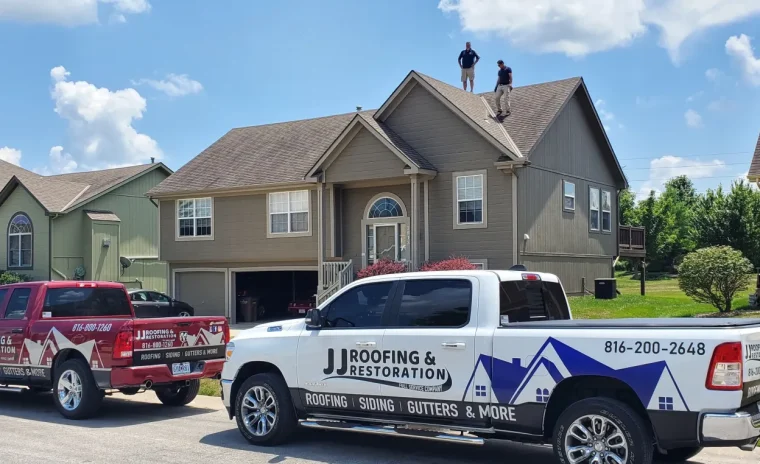
At JJ Roofing & Restoration, LLC, our team has helped countless homeowners navigate the insurance claims process following storm damage. We provide thorough inspections, detailed documentation, and quality repairs that restore your home’s protection. Our familiarity with local weather challenges and insurance procedures means we can guide you through each step, answer your questions, and ensure your repairs meet the highest standards. When storm damage strikes, you need a partner who combines technical skill with genuine concern for your home and family.
